Running out of money several days before payday can be frustrating, especially when you know you earn enough to cover your regular expenses. The problem is not always how much money you make. Sometimes it is cash flow management and the timing of when money comes in compared with when bills and other expenses go out.
For example, you might receive a paycheck on Friday but have your rent, car payment, insurance and several other bills due during the first week of the month. Even if your total monthly income is greater than your total expenses, poor timing can leave your checking account nearly empty before your next paycheck arrives. Learning how to manage that timing can make your money feel much less restrictive.
What Is Cash Flow Management?
Cash flow management is the process of tracking when money enters your account and when it leaves. Instead of looking only at your total monthly income and expenses, you look at the timing of individual transactions. Imagine earning $4,000 per month while spending $3,500. On paper, you have $500 left over. But if $2,000 of your expenses occur immediately after receiving one paycheck, you could still experience a cash shortage before the next paycheck.
This is why a monthly budget alone does not always tell the whole story. Cash flow management adds the timing component and shows whether you will actually have enough money available when a particular payment is due.
Match Your Bills to Your Pay Schedule
One of the simplest ways to improve cash flow is to compare your bill due dates with your income schedule.
If you are paid every two weeks, identify exactly when each paycheck arrives and which bills must be paid from it. Some expenses occur monthly, while others happen weekly or irregularly. Mapping them against your paydays can reveal periods when your account becomes unnecessarily tight.
Some companies may also allow you to change a bill’s due date. Moving a payment from immediately after payday to a later date may create more breathing room, although you should always make sure the new date works with your overall budget.
The objective is not to change how much you owe. It is to make the timing of your payments more manageable.
| Income or Expense | Example Amount | Timing |
|---|---|---|
| Paycheck | $2,000 | 1st and 15th |
| Rent | $1,400 | 1st |
| Car payment | $350 | 10th |
| Insurance | $150 | 15th |
| Groceries | $400 | Throughout month |
| Utilities | $200 | 20th |
A simple table like this can reveal why someone may feel broke at certain points during the month even when their total monthly income is sufficient.

Build a Buffer Between Paychecks
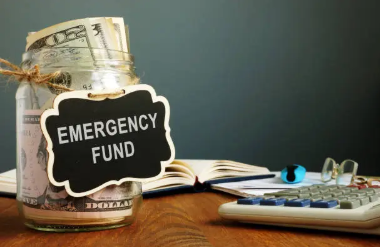
A small cash buffer can make a major difference when managing irregular expenses and paycheck timing. Suppose you normally have $100 left before payday. An unexpected $75 expense could put you in a difficult position. If you gradually build a $500 buffer in your checking or savings account, the same expense becomes much easier to handle.
You do not necessarily need thousands of dollars to begin. Even building a small reserve can reduce the constant pressure of waiting for the next paycheck. The key is to treat the buffer as protection rather than extra spending money. When an unexpected expense occurs, the money is available because you planned for the possibility.
Stop Letting Irregular Expenses Surprise You
Some expenses are predictable even though they do not occur every month. Car maintenance, insurance renewals, property taxes, school expenses, annual memberships and holiday spending are examples.
These costs can cause major cash-flow problems when you treat them as surprises. Instead, estimate the yearly cost and divide it into monthly amounts.
If you expect to spend $1,200 throughout the year on vehicle maintenance and repairs, setting aside approximately $100 per month creates a fund for those expenses. When the repair eventually arrives, the money is already available.
This approach turns irregular expenses into predictable parts of your financial plan.
Take Control of Your Cash Flow
Effective cash flow management is not about making more money every time your checking account gets low. It is about making sure the money you already earn is available when you need it.
Start by looking at your paydays, bill due dates and regular spending patterns. Then identify the periods of the month when your account tends to become tight. That is where changes can make the biggest difference.
You may discover that the solution is as simple as adjusting a bill date, spreading certain purchases across the month or building a small cash reserve. In other situations, you may discover that your expenses are simply too high relative to your income and require a larger financial change.
The important thing is knowing which problem you actually have. Someone with sufficient monthly income but poor payment timing has a different problem from someone whose expenses consistently exceed their income.
Once you understand your personal cash flow management situation, you can make better decisions about spending, saving and debt. Instead of constantly waiting for payday to rescue your checking account, you can begin creating a financial system where your money is available when your bills and everyday expenses actually arrive.
Guiscard M. is the founder and editor of MoneyLendings.com – a financial education platform focused on helping consumers better understand credit, debt, loans, and personal finance decisions. With over 25 years of experience in finance and insurance, he brings practical knowledge of lending, credit, debt management, and personal finance to create useful tools, calculators, and educational resources that simplify complex financial topics.
Combining this experience with expertise in web development and digital content creation, Guiscard focuses on making financial information easier to understand and more accessible.