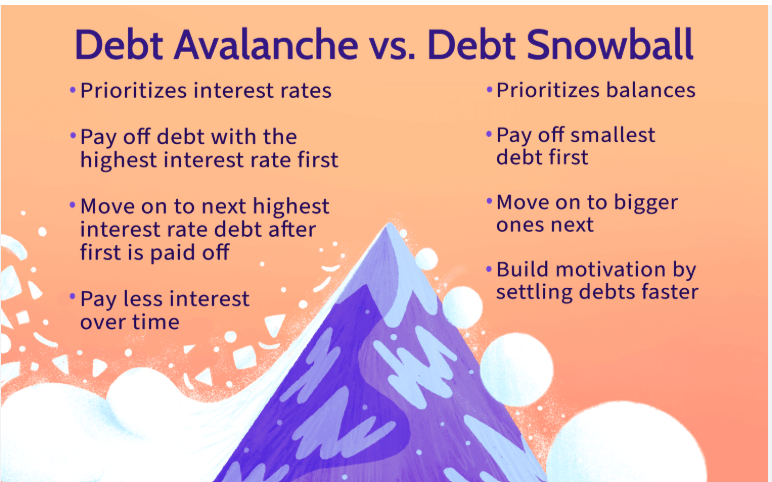
When you have multiple debts, choosing the right repayment strategy can make a major difference. Two of the most popular debt payoff approaches are the debt snowball method and the debt avalanche method. Both strategies can help you eliminate debt, but they focus on different priorities. The debt snowball method emphasizes motivation and quick wins, while the debt avalanche method focuses on reducing interest costs.
Our Debt Snowball Calculator can help you organize your balances and estimate your repayment timeline.
What Is the Debt Snowball Method?
The debt snowball method focuses on paying off your smallest debt balance first.
The process works like this:
- List all debts from smallest balance to largest balance.
- Make the minimum payment on every debt.
- Put extra money toward the smallest balance.
- Once the smallest debt is paid off, move that payment toward the next debt.
The idea is that eliminating smaller balances creates momentum and motivation.
Benefits of the Debt Snowball Method
Quick Progress
Paying off a smaller balance early can provide a psychological boost. Many people find that seeing an account reach zero helps them stay committed.
Simpler Debt Management
Fewer balances mean fewer payments to track each month.
Strong Motivation
Debt repayment is not only a mathematical challenge. It is also behavioral. A strategy that keeps you motivated can increase your chances of success.
What Is the Debt Avalanche Method?
The debt avalanche method focuses on paying off debts with the highest interest rates first.
The process:
- List your debts by interest rate.
- Make minimum payments on all accounts.
- Apply extra money toward the highest-interest debt.
- Continue until all debts are eliminated.
This approach focuses on reducing the most expensive debt first.
Benefits of the Debt Avalanche Method
Potential Interest Savings
Because high-interest debt is eliminated first, this method may reduce the total amount of interest paid.
Financial Efficiency
From a mathematical perspective, the avalanche method is often the most efficient approach.
Good for Organized Planners
People who prefer numbers and long-term savings may prefer this strategy.
Debt Snowball vs Debt Avalanche Comparison
| Feature | Debt Snowball | Debt Avalanche |
|---|---|---|
| Main Focus | Smallest balance first | Highest interest rate first |
| Biggest Benefit | Motivation | Interest savings |
| Best For | Quick wins | Cost efficiency |
| First Payoff | Usually faster | May take longer initially |
| Total Interest | May be higher | Often lower |
Which Debt Payoff Method Should You Choose?
There is no single method that works best for everyone.
The debt snowball may be a better choice if:
- You need motivation
- You have several smaller balances
- You prefer visible progress
The debt avalanche may be a better choice if:
- You want to minimize interest costs
- You are comfortable with a slower beginning
- You prefer a mathematical approach
The most effective strategy is the one you can consistently follow.
Combining Both Strategies
Some people combine elements of both methods.
For example:
- Pay off one small balance first for motivation
- Then focus on the highest-interest debt
- Continue adjusting as your financial situation changes
The best plan is one that fits your income, expenses, and personal goals.
Use Our Debt Snowball Calculator
A clear repayment plan can make debt management easier.
Our free Debt Snowball Calculator helps you:
- Organize multiple debts
- Estimate payoff timelines
- Understand repayment progress
- Create a structured repayment strategy
Having a clear plan can make the journey toward becoming debt-free easier to manage.
Final Thoughts
The debt snowball and debt avalanche methods are both effective ways to approach repayment. The debt snowball focuses on motivation and momentum, while the debt avalanche focuses on reducing interest costs. The right choice depends on your financial situation and the strategy you are most likely to maintain. The most important step is getting started and creating a plan that moves you toward financial freedom.
Guiscard M. is the founder and editor of MoneyLendings.com – a financial education platform focused on helping consumers better understand credit, debt, loans, and personal finance decisions. With over 25 years of experience in finance and insurance, he brings practical knowledge of lending, credit, debt management, and personal finance to create useful tools, calculators, and educational resources that simplify complex financial topics.
Combining this experience with expertise in web development and digital content creation, Guiscard focuses on making financial information easier to understand and more accessible.