Credit card debt can be one of the most challenging types of debt to manage. High interest rates, minimum payments, and multiple balances can make it feel like you are making payments without seeing real progress. The good news is that with the right strategy, you can reduce your balances faster, save money on interest, and create a clear path toward becoming debt-free. The first step is understanding your current situation. Use our Credit Card Payoff Calculator to estimate how long it may take to pay off your balance and see how additional payments can impact your payoff timeline.
Why Credit Card Debt Can Be Difficult to Pay Off
Credit cards provide convenient access to funds, but carrying a balance from month to month can become expensive. Unlike installment loans with a fixed repayment schedule, credit card balances often continue growing because interest is added every billing cycle.
Some of the biggest challenges include:
- High annual percentage rates (APRs)
- Making only the minimum payment
- Multiple credit card balances
- Adding new purchases while paying down existing debt
Understanding how credit card interest works is an important first step toward creating an effective payoff plan.
1. Stop Adding New Credit Card Debt
Before focusing on repayment strategies, it is important to prevent your balance from increasing.
Consider:
- Pausing unnecessary credit card purchases
- Using cash or a debit card for everyday expenses
- Creating a realistic monthly spending plan
- Removing saved credit card information from online stores
The goal is to create a situation where your payments are reducing your balance instead of replacing new charges.
2. Pay More Than the Minimum Payment
Minimum payments are designed to keep your account current, but they can extend your repayment timeline for years. For example, a large balance with a high interest rate may take a very long time to repay if you only make minimum payments.
Even a small increase can help:
- An additional $25 per month
- A larger payment after receiving a bonus or tax refund
- Making payments more frequently
Extra payments reduce your principal balance faster, which can lower the amount of interest you pay over time.
3. Choose a Debt Payoff Strategy
Having a plan is often more effective than simply making random extra payments. Two popular approaches are:
Debt Snowball Method
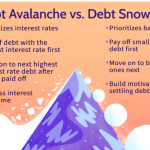
The debt snowball method focuses on paying off the smallest balance first. You continue making minimum payments on all debts, then apply extra money toward the smallest balance. Once that debt is paid off, you move that payment amount toward the next balance.
Benefits:
- Creates quick wins
- Builds motivation
- Helps simplify multiple debts
Learn more about this strategy in our guide:
Debt Snowball vs Debt Avalanche: Which Debt Payoff Method Is Better?
Debt Avalanche Method
The debt avalanche method focuses on paying off the debt with the highest interest rate first. This strategy can help reduce the total amount of interest paid because expensive debt is eliminated first.
Benefits:
- May save more money on interest
- Targets high-cost debt
- Works well for people focused on mathematical efficiency
4. Consider Debt Consolidation Options
For some borrowers, combining multiple debts into one payment may make repayment easier.
Debt consolidation options may include:
- Personal loans
- Balance transfer credit cards
- Debt management programs
Before choosing consolidation, consider:
- Interest rate
- Fees
- Monthly payment
- Repayment timeline
A lower payment does not always mean lower total costs, so it is important to compare the full picture.
5. Reduce Your Credit Utilization
Your credit utilization ratio measures how much of your available credit you are using. A high utilization rate can negatively impact your credit score.
Ways to improve utilization include:
- Paying down credit card balances
- Keeping older accounts open
- Avoiding unnecessary new credit applications
- Paying balances before the statement closing date
Reducing credit utilization can support both debt payoff goals and long-term credit health.
Use Our Credit Card Payoff Calculator
Creating a payoff plan becomes easier when you understand your numbers.
Our free Credit Card Payoff Calculator can help you estimate:
- How long it may take to eliminate your balance
- How much interest you may pay
- How extra payments can speed up repayment
Understanding your timeline can help you stay motivated and make better financial decisions.
Final Thoughts
Paying off credit card debt requires patience, consistency, and a strategy that fits your situation. Whether you choose the debt snowball method, debt avalanche method, debt consolidation, or another approach, the most important step is creating a plan and following through. Small improvements made consistently can create significant progress over time.
Guiscard M. is the founder and editor of MoneyLendings.com – a financial education platform focused on helping consumers better understand credit, debt, loans, and personal finance decisions. With over 25 years of experience in finance and insurance, he brings practical knowledge of lending, credit, debt management, and personal finance to create useful tools, calculators, and educational resources that simplify complex financial topics.
Combining this experience with expertise in web development and digital content creation, Guiscard focuses on making financial information easier to understand and more accessible.