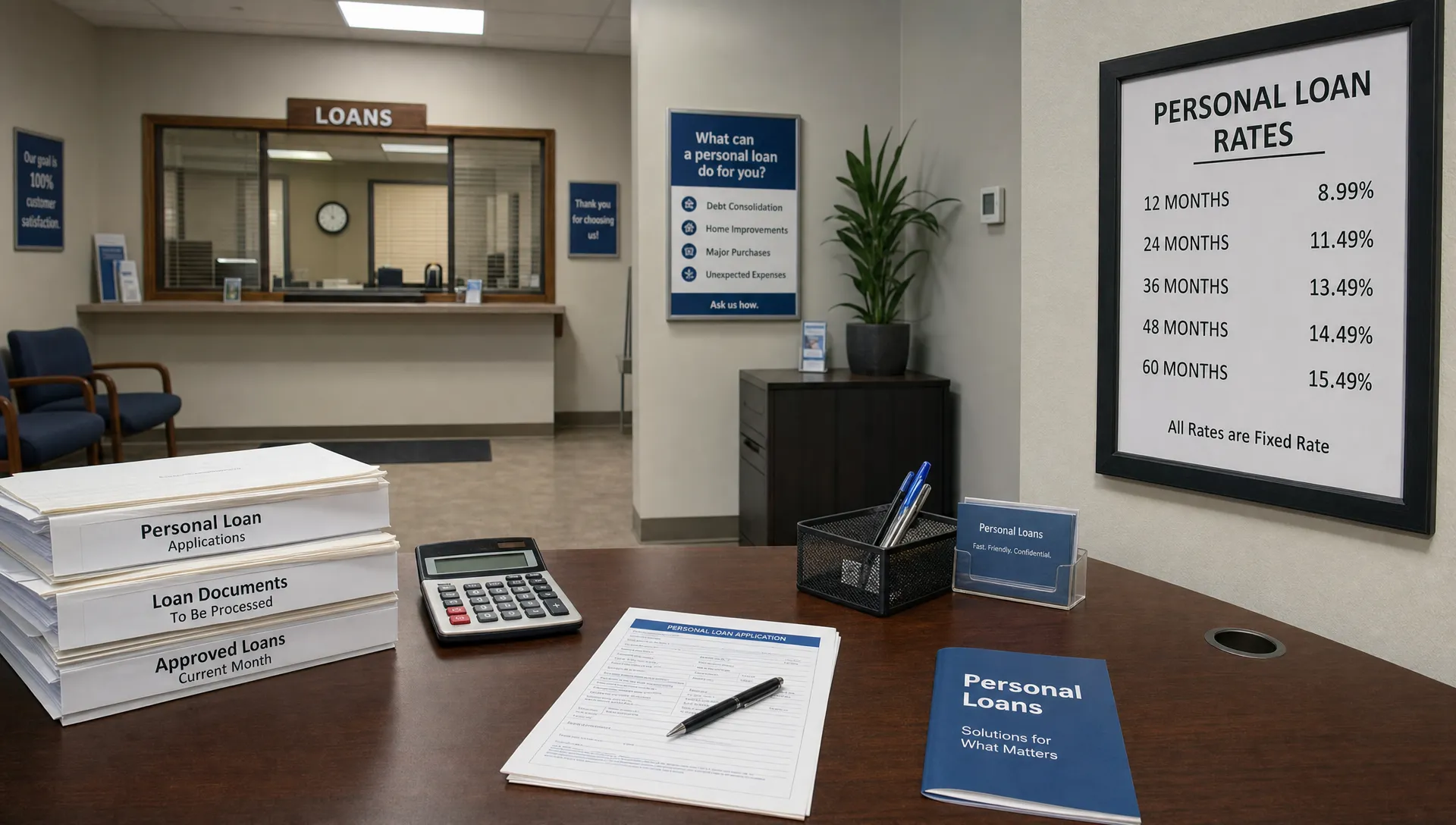
Borrowing can be a useful financial tool when it solves a specific problem at a manageable cost. A personal loan gives you a fixed amount of money upfront and asks you to repay it in regular installments over time, usually with a fixed interest rate. For first-time borrowers, the appeal is simple: predictable payments, a clear payoff date, and faster access to funds than many other forms of financing. The more important question is whether the monthly payment, total cost, and loan structure truly fit your budget and goals.
How Personal Loans Work
Most personal loans are installment loans. After approval, the lender gives you a lump sum, and you repay it through monthly payments over a set term. Each payment usually includes both principal, which reduces what you borrowed, and interest, which is the cost of borrowing.
These loans are commonly used for debt consolidation, emergency expenses, home repairs, medical bills, moving costs, or other large one-time needs. They are usually unsecured, which means you do not pledge collateral such as a vehicle or savings account. Some lenders also offer secured options that may come with different rates and risks.
Many borrowers like the structure because the payment amount often stays the same from month to month. That makes planning easier than with revolving debt, where balances and minimum payments can change.
- You borrow a set amount.
- You receive funds in one disbursement.
- You repay on a fixed schedule.
- You know the expected payoff date from the start.
That predictability can be helpful, but it does not make the loan inexpensive. The monthly payment may look affordable while the total repayment cost is much higher than the amount borrowed.
Loan Terms and Repayment Periods
The term is the length of time you have to repay the loan. Common terms range from 12 to 60 months, though some lenders go shorter or longer. A shorter term usually means a higher monthly payment but lower total interest. A longer term lowers the monthly payment but increases the total amount repaid.
The table below shows how repayment length can affect cost on a $10,000 loan with a 12% APR. These figures are estimates and do not include fees.
| Repayment Term | Estimated Monthly Payment | Estimated Total Repaid | Estimated Total Interest |
|---|---|---|---|
| 24 months | $471 | $11,304 | $1,304 |
| 36 months | $332 | $11,952 | $1,952 |
| 60 months | $222 | $13,320 | $3,320 |
This is one of the most important tradeoffs in borrowing. A 60-month term may free up room in the monthly budget, but it can add roughly $2,000 more in interest than a 24-month term on the same loan amount. If you choose a longer term for flexibility, do it knowingly rather than focusing only on the smaller payment.
A good rule is to choose the shortest term that still leaves room in your budget for essentials, emergency savings, and irregular expenses such as car repairs or annual insurance bills.
Interest Rates and Fees
The interest rate tells you how much the lender charges to borrow money, but the annual percentage rate, or APR, gives a fuller picture because it can include certain fees. When comparing options, APR is usually the more useful number.
Common costs to review include:
- Interest rate: The base cost of borrowing.
- APR: A broader measure of borrowing cost, often including fees.
- Origination fee: An upfront charge some lenders deduct from the loan proceeds or add to the balance.
- Late fee: A penalty if you miss the due date or do not pay enough.
- Prepayment penalty: A charge for paying the loan off early, though many lenders do not charge one.
An origination fee can make a lower-rate loan more expensive than it first appears. For example, if you are approved for $8,000 with a 5% origination fee, you may receive only $7,600 in hand while still repaying the full $8,000 plus interest, depending on how the lender structures the loan.
| Cost Item | Why It Matters | What to Check |
|---|---|---|
| APR | Shows a broader borrowing cost | Compare this across lenders, not just the interest rate |
| Origination fee | Reduces cash received or increases amount financed | Ask whether it is deducted upfront |
| Late fee | Adds cost if cash flow becomes tight | Review grace periods and fee amount |
| Prepayment penalty | Can limit flexibility | Confirm whether extra payments are allowed without charge |
Always ask for the full repayment schedule before signing. A lender should be able to show your monthly payment, due dates, and estimated total cost over the life of the loan.
Secured vs. Unsecured Borrowing
One of the biggest structural differences is whether the loan is secured by collateral.
| Type | Collateral Required | Typical Rate Impact | Main Risk |
|---|---|---|---|
| Unsecured | No | Often higher | Approval may depend more heavily on credit and income |
| Secured | Yes | May be lower | You could lose the collateral if you default |
An unsecured loan is more common for general consumer borrowing. Because the lender has no asset to repossess, rates may be higher, especially for borrowers with weaker credit. A secured loan may be easier to qualify for or may offer a lower rate, but the added risk is serious. If the loan is secured by a savings account, vehicle, or other asset, missed payments can lead to financial loss beyond credit damage.
For many borrowers, the lower rate on a secured loan is not automatically better. It depends on whether the payment is comfortably affordable and whether the pledged asset is worth putting at risk.
Credit Requirements and What Lenders Review
Credit score matters, but it is not the only factor. Lenders often evaluate several parts of your financial profile:
- Credit score and payment history
- Income and employment stability
- Debt-to-income ratio
- Existing loan balances
- Recent credit applications
- Banking history and cash flow, in some cases
Borrowers with stronger credit usually qualify for lower APRs and better terms. Borrowers with fair or limited credit may still qualify, but rates can rise sharply. That is why prequalification can be valuable. Many lenders let you check estimated offers with a soft credit inquiry, which does not affect your credit score the way a hard inquiry can.
If your credit profile is still improving, waiting a few months can sometimes produce meaningful savings. Paying down credit card balances, correcting credit report errors, and avoiding new debt before applying may improve both approval odds and pricing.
Comparing Loan Options the Right Way
Comparing offers is about more than finding the lowest advertised rate. You should compare the amount you actually receive, the monthly payment, the APR, the repayment term, fees, and the total amount repaid.
Consider this example. A borrower needs $8,000.
| Offer | APR | Term | Origination Fee | Estimated Monthly Payment | Estimated Total Borrowing Cost |
|---|---|---|---|---|---|
| Lender A | 11.2% | 36 months | $0 | $263 | About $1,464 |
| Lender B | 9.4% | 36 months | 5% of loan amount | $256 | About $1,609 when the fee is included |
At first glance, Lender B looks cheaper because the APR and monthly payment are lower. But if the borrower needs the full $8,000 and the fee is deducted from proceeds, the borrower may receive only $7,600 and still repay the full balance. In practice, that may make the second loan less attractive.
When comparing lenders, ask these questions:
- How much money will I actually receive after fees?
- What is the full APR?
- What is the monthly payment?
- How much will I repay in total?
- Is there a penalty for early payoff?
- How quickly are funds disbursed?
- What happens if I pay late?
Those details often matter more than a headline rate.
When Borrowing May Help and When It Can Make Things Worse
A loan can make financial sense when it lowers your overall costs, solves a necessary problem, or replaces more expensive debt with a clear payoff plan. It can be especially useful when the expense is unavoidable and the payment fits comfortably within your budget.
For example, suppose someone has $12,000 in credit card debt at 22% interest and can qualify for a 36-month personal loan at 11%. If they repay both on a three-year schedule, the loan payment would be about $393 per month, compared with about $458 per month on the higher-rate balance. The lower-rate loan could save roughly $65 per month and more than $2,000 in total interest. But that only helps if the borrower stops adding new card debt afterward.
Borrowing is more risky when:
- The money is for discretionary spending that can wait.
- You need the loan to cover a recurring monthly shortfall.
- The payment works only if nothing unexpected goes wrong.
- You are using new debt without addressing the underlying budget problem.
If a loan payment would leave almost no room for savings, utilities, transportation, food, and irregular bills, the loan may create more pressure rather than solve it.
Responsible Borrowing Decisions
Before taking out a loan, run a simple stress test on your budget. Start with your take-home pay. Subtract housing, utilities, food, insurance, transportation, minimum debt payments, and regular savings. Then subtract the proposed loan payment. If the remaining amount is too thin to handle normal fluctuations, the payment may not be sustainable.
It also helps to think beyond approval. Lenders decide whether you qualify. You decide whether the debt is wise.
Practical steps before signing:
- Check whether the expense can be reduced, delayed, or covered from savings.
- Review at least three loan offers or prequalification results.
- Compare APR, fees, term length, and total repayment cost.
- Confirm that the payment still works if a utility bill, medical expense, or car repair shows up next month.
- Read the late-payment and hardship policies.
- Avoid borrowing more than you need just because you were approved for a higher amount.
One common mistake is choosing the maximum approved amount instead of the minimum needed amount. A larger balance usually means more interest and a longer path back to financial flexibility.
Applying the Lessons to Your Own Decision
The main lesson is that a personal loan is not just a source of quick cash. It is a structured financial commitment with a fixed timeline, a monthly payment, and a total cost that can vary widely based on APR, fees, credit profile, and repayment term. Shorter terms usually cost less overall, but only if the payment remains affordable. Lower advertised rates do not always mean a better deal once fees are included. Unsecured loans avoid collateral risk, while secured loans may offer lower rates in exchange for higher stakes if you fall behind.
To apply this information, start with your purpose for borrowing and calculate the smallest amount you actually need. Then compare offers using APR, monthly payment, fees, and total repayment cost rather than marketing claims. Review your budget honestly, including room for emergencies, and choose a term that balances affordability with total cost. If the payment only works under ideal conditions, it is probably too much debt.
Used carefully, a personal loan can help manage a necessary expense or simplify repayment of higher-cost debt. Used casually, it can lock in years of avoidable payments. The difference usually comes down to comparison, planning, and borrowing only when the numbers truly support the decision.
Recommended Partner Guides
Guiscard M. is the founder and editor of MoneyLendings.com – a financial education platform focused on helping consumers better understand credit, debt, loans, and personal finance decisions. With over 25 years of experience in finance and insurance, he brings practical knowledge of lending, credit, debt management, and personal finance to create useful tools, calculators, and educational resources that simplify complex financial topics.
Combining this experience with expertise in web development and digital content creation, Guiscard focuses on making financial information easier to understand and more accessible.